Every gardener knows the frustration. You spend weeks nurturing seedlings, carefully tending your beds, and one morning you walk outside to find your lettuce decimated, your tomatoes gnawed, and fresh paw prints running straight through your carefully prepared soil. Cats, squirrels, deer, and slugs show no respect for the effort behind a thriving vegetable patch. The good news? Some of the most effective deterrents cost almost nothing and require no chemicals whatsoever. Here is what actually works, and why.
The Plastic Fork Trick That Gardeners Swear By
It sounds almost too simple to be true. Yet professional gardeners and horticultural experts, including specialists cited by British newspaper The Express and the team at Farm Flavour, have consistently recommended one of the most cost-effective pest deterrents available: the humble plastic fork.
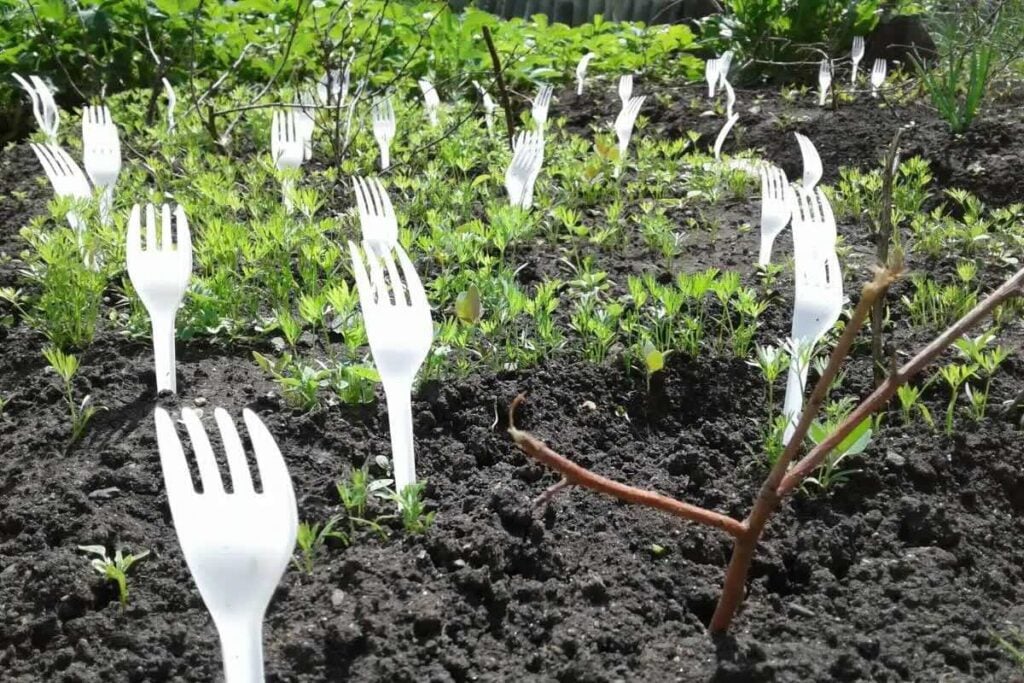
The technique is straightforward. Push plastic forks into the soil around your plants, prongs facing upward, spaced a few inches apart throughout your beds. The result is an irregular, uncomfortable surface that cats, squirrels, and other small animals instinctively want to avoid. Animals naturally seek out soft, unobstructed ground where they can move, dig, and settle comfortably. A field of upward-pointing prongs removes that comfort entirely.
Reports from gardeners who have tried this method describe a marked reduction in animal visits, particularly from cats who use vegetable beds as convenient litter areas. The physical barrier disrupts their approach before they even reach the plants themselves.
It is worth being honest about one limitation. The effectiveness of this technique has not been validated through formal scientific trials. What exists is a substantial body of anecdotal evidence from gardeners across multiple countries who report consistent results. Whether it works through physical discomfort, visual deterrence, or simple disruption of familiar pathways remains an open question. What is clear is that it costs virtually nothing and harms no one.
Why Reusing Plastic Forks Is Smarter Than Buying Specialist Products
Beyond the deterrent function itself, this approach carries several practical advantages that make it worth considering seriously.
The cost factor alone is compelling. Specialist garden barriers, ultrasonic pest devices, and chemical repellents represent ongoing expenses that accumulate quickly over a growing season. A handful of forks from your kitchen drawer costs nothing and can be repositioned as your garden layout evolves.
Flexibility is another genuine strength. Unlike permanent fencing or fixed installations, fork arrangements can be adjusted in minutes. As seedlings grow and beds change, the protective layout adapts without any tools or investment. You simply pull them up and reposition them.
There is also an environmental dimension worth acknowledging. Giving functional second life to plastic items that would otherwise head straight to landfill represents a small but real contribution to sustainable gardening practice. The key, as with any use of plastic in a garden environment, is thoughtful deployment that respects the broader ecosystem rather than introducing unnecessary material into the soil over the long term.
Natural Repellents That Work on Multiple Senses
Plastic forks address the physical dimension of pest deterrence. Natural scent-based repellents work on an entirely different level, targeting the highly sensitive olfactory systems of animals and insects to make your garden simply unpleasant to visit.
Cayenne pepper ranks among the most reliably effective options available. Sprinkling approximately a quarter cup across your planting beds creates a sensory barrier that affects both smell and taste. Most animals that encounter cayenne pepper once develop a strong and lasting aversion to the area where they encountered it. The method is completely non-toxic to plants, requires no special equipment, and costs very little. Reapplication after rain is necessary, but the process takes only minutes.
Essential oils offer a more aromatic alternative. Peppermint, eucalyptus, and citrus-based oils have demonstrated pest-repelling properties while adding a pleasant fragrance to the garden environment. A few drops diluted in water and applied around the perimeter of beds can deter cats and rodents without affecting plant health.
Bay leaves deserve special mention as a complementary tool. Their intense, distinctive aroma is deeply unappealing to many common garden pests. Placing dried bay leaves around vulnerable plants or along the edges of beds creates a scent boundary that many animals prefer to avoid entirely.
Coffee Grounds: The Repellent That Also Feeds Your Garden
Dried coffee grounds represent one of those rare garden solutions that solve two problems simultaneously. As a pest deterrent, they create a textured, strongly scented surface barrier that slugs and snails find deeply inhospitable. The sharp, abrasive texture irritates the soft bodies of mollusks, and the intense coffee aroma appears to deter a wider range of insects and small mammals as well.
As a soil amendment, however, coffee grounds deliver genuinely impressive results. They are naturally rich in nitrogen, potassium, and phosphorus — three of the core nutrients that drive healthy plant growth. Worked into the soil or spread as a surface mulch, they improve soil structure, enhance drainage, and feed the microbial communities that underpin long-term garden fertility.
The combination of these two functions makes coffee grounds particularly valuable for kitchen gardeners who want to work with natural cycles rather than against them. Rather than introducing a foreign deterrent into the garden, coffee grounds become part of the soil system itself, contributing to plant health while discouraging the pests that threaten it.
Companion Planting: Nature’s Own Pest Management System
Perhaps the most elegant approach to garden pest control requires no intervention at all beyond thoughtful planting decisions. Companion planting — the strategic combination of plant species based on their complementary properties — has been practiced by gardeners for centuries and continues to deliver measurable results.
The principle works on several levels simultaneously. Certain plants release volatile compounds through their roots, leaves, or flowers that repel specific insects and animals. Others attract beneficial predators that naturally control pest populations. Some combinations improve soil conditions in ways that make the entire bed more resilient.
Several pairings stand out for their practical effectiveness. Marigolds planted alongside tomatoes act as a powerful insect deterrent, their pungent aroma masking the attractive scent of ripening fruit from aphids, whiteflies, and other common tomato pests. The visual effect in the garden is also genuinely beautiful, making this one of the most satisfying companion combinations available.
Basil growing beside peppers serves a dual function that many gardeners appreciate. It actively suppresses mite populations through its aromatic oils while simultaneously enhancing the flavor development of neighboring pepper fruits through still-debated biochemical interactions. The practical result is healthier plants and better harvests from the same space.
Parsley paired with roses addresses one of the most persistent and damaging fungal problems in the garden: rust disease. The vigorous, spreading growth habit of parsley helps suppress the conditions that allow rust to establish, while its root activity appears to benefit the soil chemistry around rose plants.
Building a garden around companion planting principles takes a season or two of observation and adjustment. Once established, however, it creates a self-reinforcing system of natural defenses that reduces the need for any external intervention at all. The garden begins to protect itself.
A well-protected vegetable garden does not require chemical warfare or expensive technology. It requires observation, creativity, and a willingness to work with natural systems rather than around them. From plastic forks to coffee grounds to carefully chosen plant neighbors, the most effective tools are often the simplest ones.