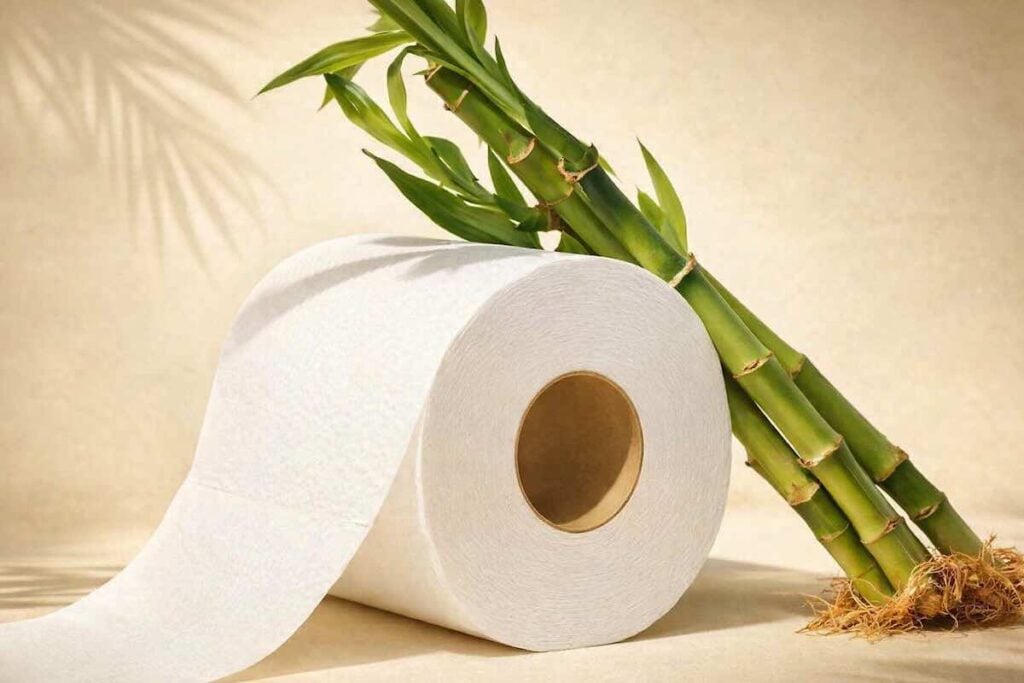
Toilet paper feels non-negotiable in modern life. Yet groundbreaking new research is challenging one of the bathroom aisle’s most popular eco-swaps: bamboo toilet paper, predominantly manufactured in China, may carry a heavier climate burden than conventional tissue made from North American or Brazilian wood pulp.
Meanwhile, a quieter revolution is unfolding in households worldwide. More people are abandoning paper altogether, turning to bidets and water-based hygiene instead. Taken together, these developments force us to confront a fundamental question: if we genuinely care about forests, carbon emissions, and our plumbing infrastructure, what is truly the most responsible way to stay clean?
What the Bamboo Research Actually Uncovered
Scientists at North Carolina State University conducted a comprehensive life-cycle assessment of consumer bathroom tissue — tracking environmental impact from raw material extraction all the way through disposal. They compared standard US tissue, typically derived from Brazilian eucalyptus and Canadian softwood pulp, against bamboo-based tissue manufactured in China and shipped across the Pacific.
The findings are striking. One metric ton of conventional US wood-based tissue, produced using a widely adopted manufacturing process called light dry creped, generates approximately 1,824 kilograms of CO₂ equivalent over its entire lifespan. The same quantity of bamboo tissue, made in China and delivered to American consumers, clocks in at roughly 2,400 kilograms — a gap of more than 30 percent.
Ultra-premium tissue, relying on more energy-intensive drying technology, pushes those numbers even higher. Counterintuitively, incorporating bamboo fiber into these luxury blends worsened the climate footprint compared to an entirely wood-based formula.
Bamboo tissue also underperformed across several additional environmental indicators, including smog formation and certain respiratory health metrics.
The Real Culprit: Energy, Not the Plant
The researchers are emphatic on one critical point — bamboo itself is not the problem. The plant grows extraordinarily fast, sequesters carbon efficiently, and requires no replanting after harvest. The environmental gap stems almost entirely from where and how today’s bamboo tissue is manufactured.
Chinese mills in the study drew heavily on coal-fired electricity and fossil-fuel steam to power their drying processes. By contrast, Canadian and Brazilian pulp facilities supplying the US market rely more extensively on biomass energy and benefit from cleaner grid electricity rich in hydropower and renewables.
When researchers modeled bamboo production using a significantly cleaner energy mix, its carbon footprint fell sharply — converging with wood-based alternatives. The conclusion is unambiguous: for climate purposes, the energy behind the mill matters far more than the fiber going into it.
This is not the story told by a green leaf logo and the words “tree-free” on the packaging.
Why Swapping the Roll Isn’t Enough
The scale of global tissue consumption is staggering. Tens of thousands of trees are felled every single day to meet demand, and Americans consume tissue at rates far exceeding the global average — a consequence, in part, of cultural norms that favor dry paper over water-based hygiene prevalent across much of Asia and southern Europe.
The US hygiene tissue market alone is projected to approach $50 billion in annual revenue. At that volume, even modest shifts in production methods or consumer behavior translate into enormous environmental consequences.
Simply substituting one type of single-use fiber for another — particularly one manufactured with coal and shipped across an ocean — leaves the fundamental climate math unchanged. The regenerative advantages of bamboo forests are effectively canceled out by energy-intensive processing and long-haul shipping under current industry conditions.
Paper-Free Bathrooms: Already the Global Norm
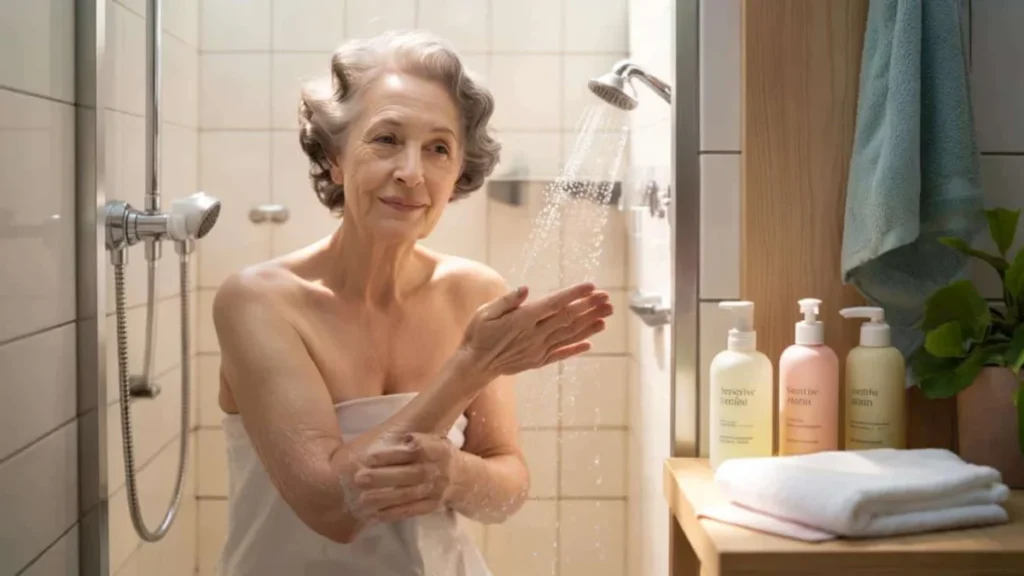
Across large swaths of Asia, the Middle East, and southern Europe, water has always been the primary hygiene tool — not paper. Traditional porcelain bidets, integrated toilet-seat wash systems, and handheld spray attachments are standard bathroom fixtures, not novelties.
Modern bidet attachments can be installed on most existing toilets without professional plumbing work, at a one-time cost comparable to just a few months of premium bamboo tissue purchases. A controlled stream of clean water removes residue mechanically and more completely than dry paper alone. After rinsing, a small reusable cloth or a minimal amount of tissue is all that’s needed to pat dry.
For those unwilling to modify their bathroom hardware, travel bidets — compact squeeze bottles fitted with a directional nozzle — offer a zero-installation way to experience water-based hygiene before committing to anything permanent.
The Wet Wipe Trap
Many consumers reach for “flushable” wet wipes in pursuit of a fresher feeling. Wastewater engineers tell a grimmer story. Studies conducted across Europe and North America consistently link nonwoven wipes to pump blockages, sewer fatbergs, and costly municipal maintenance — regardless of what the packaging claims.
Most wet wipes degrade far more slowly than conventional toilet paper, often contain synthetic fibers, and belong in the trash, not the toilet. Replacing one disposable product with a more durable and damaging disposable is, at best, a lateral move — and frequently a step backward.
A Practical Hierarchy for a Lower-Impact Bathroom
For most households, a straightforward, ranked approach works best:
First — use less tissue overall. Avoid ultra-thick premium rolls, which demand more energy-intensive drying during manufacturing.
Second — when buying paper, choose products made domestically or regionally from certified sustainably managed or recycled fibers. Shorter supply chains reduce transport emissions and support responsible forest stewardship.
Third — consider a bidet attachment or handheld sprayer. The upfront investment pays off within months through reduced paper consumption, fewer cardboard cores, and a meaningfully smaller claim on the global pulp supply.
Fourth — treat “tree-free” marketing claims with healthy skepticism. Without transparent emissions data, a different plant does not automatically deliver a lower carbon footprint.
The Bigger Picture
A genuinely greener bathroom has little to do with the mascot printed on the wrapper. It comes down to three things: how much fiber we consume, how cleanly that fiber is produced, and how much of the work we let water do instead.
The bamboo story is ultimately a lesson in the limits of ingredient-swapping as an environmental strategy. Real progress requires cleaner manufacturing energy, shorter supply chains, and — perhaps most powerfully — the willingness to rethink habits that most of us have never questioned at all.