How to clean sticky kitchen cabinets rarely crosses your mind until the sun hits every smear at once. One warm streak of afternoon light can turn a decent kitchen into a confession. The dull shine around the stove suddenly looks greasy, tired, and older than it should. That moment feels annoying, though it also feels useful, because it pushes you past quick wipe-downs and into real cleaning.
How to clean sticky kitchen cabinets
Most cabinet grime does not come from one dramatic spill. It builds quietly from steam, oil, dust, fingerprints, and tiny cooking droplets. That mix settles on doors, frames, and handles, and it hardens over time into a tacky film. Standard sprays often freshen the surface without truly lifting that layer. They can leave a glossy trace that feels clean for an hour and sticky by evening. The better approach starts with a gentler mindset. You are not attacking the cabinets. You are loosening old buildup without rough scrubbing or harsh perfume.
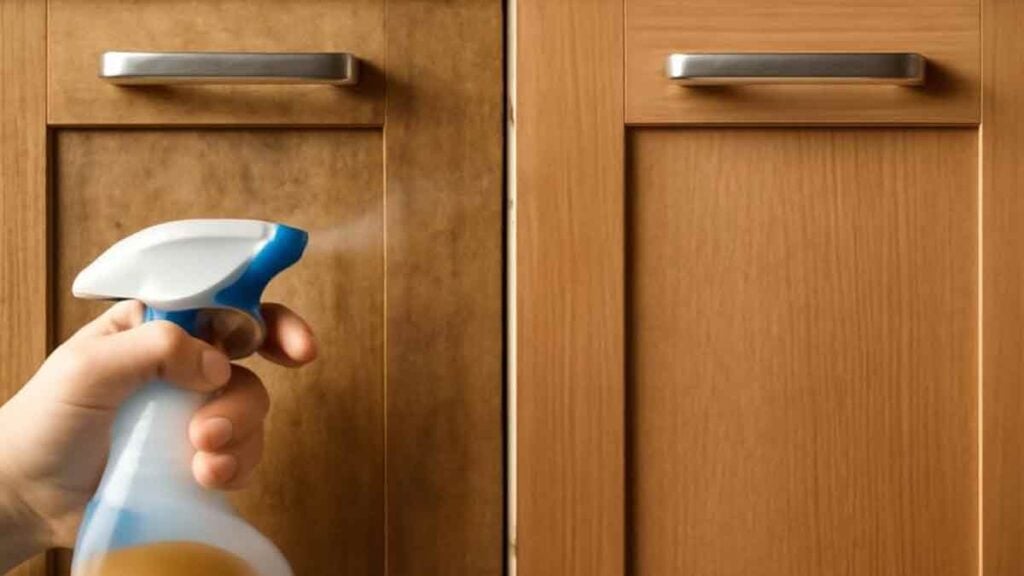
Warm water and white vinegar usually handle the job beautifully on sealed wood, paint, and laminate. A few drops of mild dish soap can help on stubborn spots near the stove. The trick is balance, not force. Use a soft cloth. Wring it well. Wipe slowly, and let the moisture do some work before your hand does the rest. Once people learn how to clean sticky kitchen cabinets, they often stop buying half the bottles under the sink. The method feels plain, though that plainness is part of its charm. It works without drama, and it leaves the room feeling honestly clean instead of artificially scented.
The Small Test That Changes Everything
A smart cleaning session begins with one hidden spot, not the whole kitchen. Pick the inside edge of a door or a corner near a hinge. Dampen a cloth with equal parts warm water and vinegar, and pass it lightly across the surface. Let it dry for a minute, and check the finish in normal light. If nothing dulls or clouds, move forward with confidence. That tiny test saves trouble, especially on older cabinets with uncertain paint or varnish.
After that, work one door at a time. Wipe the top edge first, since grease loves places nobody sees daily. Move across the center panel next. Finish with the area around handles, where skin oils and cooking residue usually meet. For thicker grime, press the cloth against the sticky patch for several seconds. That pause softens the film and keeps you from scrubbing too hard. A second pass usually lifts what the first one loosened. Dry each section with another soft cloth if your cabinets are real wood. That extra step protects the finish and leaves a smoother feel. Learning how to clean sticky kitchen cabinets is less about magic ingredients and more about patient sequence. Once the first clean rectangle appears, the whole job starts feeling oddly satisfying.
Why Vinegar Feels So Much Better Than a Fancy Spray
White vinegar works because kitchen stickiness is mostly old grease with dust attached. The mild acidity helps break that bond without turning the task into chemical warfare. Warm water softens the residue, while the cloth lifts it away in thin layers. A commercial degreaser can work too, though many formulas smell louder than they clean. Some also leave behind ingredients that attract fresh dust or create a slick coat. Vinegar does not try to impress anyone. It just cuts through the haze and gets out of the way.
The scent is sharp at first, yet it fades quickly as the cabinets dry. What stays behind is a neutral, calm smell that feels more real than synthetic citrus clouds. That matters more than people admit. A kitchen should smell like food, coffee, bread, and maybe soap. It should not smell like a fake fruit storm for six hours. Once you understand how to clean sticky kitchen cabinets with simple ingredients, you start seeing the whole room differently. The cabinet color looks truer. The hardware feels smoother. Even the light bouncing off the doors seems softer and cleaner. It is a quiet result, though it changes the atmosphere of the kitchen in a very noticeable way.
The Places People Forget Until Their Fingers Find Them
Flat cabinet doors get attention, but the worst buildup usually hides around edges and hardware. Knobs collect oils from hands. Pulls trap grease in the seams. The narrow strip above the stove often turns gummy long before anyone notices. Run your fingers along the lower lip of a cabinet, and you may find a sticky ridge that never appears in casual light. Those forgotten zones deserve a slower pass. Wrap the damp cloth around a finger for tight corners.
Use a soft toothbrush around ornate handles if the grime has settled into grooves. Keep the brush barely damp, and avoid flooding the hardware base. Moisture should help, not seep. If a patch still resists, repeat the vinegar mix and let it sit briefly again. Stubborn dirt usually gives up through repetition, not aggression. That is one of the most useful things about how to clean sticky kitchen cabinets. The process rewards patience more than strength. You do not need to attack the finish or scrape at the paint. You just need to return to the same area with a little consistency. Once the handles stop dragging against your fingertips, the kitchen starts feeling cared for in a deeper, more tactile way.
Keeping the Cabinets Clean Without Turning It Into a Chore
After the first deep clean, maintenance gets much easier and much faster. A light wipe every few weeks prevents the greasy film from building into that old sticky shell. Focus on the cabinets near the stove, the trash drawer, and the doors everyone touches all day. Those spots age faster than the rest. Use the same vinegar mix sparingly, or switch to warm water with a drop of soap for lighter upkeep. Dry the surfaces after wiping, especially if the cabinets are wood. Open a window when you cook greasy meals if you can.
Turn on the vent fan even for quick stovetop sessions. Tiny habits make a bigger difference than people expect. They keep the residue softer, thinner, and easier to remove later. The best part of learning how to clean sticky kitchen cabinets is not the shine itself. It is the feeling of opening a door without that faint tack under your fingers. It is the way a once-dull kitchen suddenly feels lighter and more settled. In daily life, those details matter. how to clean sticky kitchen cabinets sounds like a plain household question, yet the answer gives something nicer than cleanliness. It gives ease, and ease is what makes a kitchen feel welcoming again.