
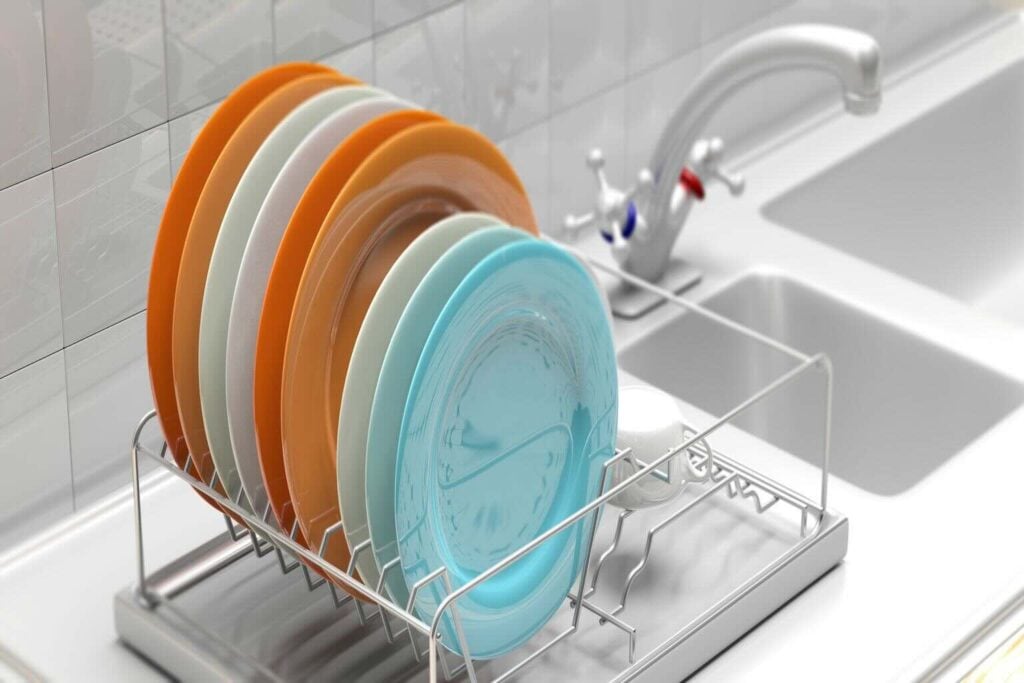
There is a quiet frustration shared by millions of home cooks. It lives beside the sink, takes up more room than it should, and never quite looks clean even when it is. The traditional dish rack has been a kitchen fixture for generations. It does its job, technically. But in an era where kitchen space is increasingly precious and home design increasingly intentional, it is starting to look like a solution that has outlived its moment.
Wall-mounted dish drainers are replacing it — slowly in some homes, quickly in others — and the reasons go well beyond aesthetics. This is a practical shift driven by real frustrations with how conventional racks perform, how much space they consume, and what they do to the surfaces beneath them.
What Makes the Traditional Rack a Problem
The case against the standard dish rack is not dramatic. No single flaw makes it intolerable. The problems accumulate instead, quietly, over years of daily use.
The most obvious issue is footprint. A full-sized dish rack occupies a substantial portion of counter space beside the sink — space that most kitchens, and especially smaller ones, cannot easily spare. In compact apartments where the counter serves simultaneously as prep surface, appliance station, and occasional dining area, a permanent rack takes on an outsized presence. Even in larger kitchens, the space it occupies is prime real estate that could serve more flexible purposes.
Water is the second problem. Dishes drip as they dry, and that moisture collects beneath the rack, pooling on the counter surface and staying there. Over time, standing water damages countertops, particularly those made from wood, laminate, or stone with imperfect sealing. It also creates conditions where bacteria and mold establish themselves readily. The area beneath a traditional dish rack is one of the more consistently damp and microbially active spots in the average kitchen — a fact that runs directly counter to the hygiene standards most people hold for their cooking environment.
The visual dimension matters too. A rack full of drying dishes introduces a particular kind of clutter — functional, necessary, but visually disruptive. Even a well-designed kitchen begins to look untidy when dishes, glasses, and utensils are permanently on display in various stages of drying. The rack rarely looks organized. It looks used, which is not the same thing.
How a Wall-Mounted System Changes the Equation
Moving the dish drying function from the counter to the wall addresses each of these problems in a single step. The counter clears. The moisture problem relocates to a system designed to handle it. The visual chaos either disappears or becomes significantly more controlled.
The immediate benefit is the counter space itself. Freeing that horizontal surface does not just create room — it changes how the kitchen feels and functions. Meal preparation becomes less cramped. There is space to lay out ingredients, rest a chopping board, or set down dishes as they come out of the oven. In compact kitchens particularly, this recovered surface area transforms the cooking experience in ways that are difficult to fully appreciate until the rack is gone.
The drainage engineering in modern wall-mounted systems is considerably more sophisticated than most people expect. Better models channel water directly into the sink through built-in drainage tubes or angled shelving, eliminating the pooling problem entirely. Others use removable drip trays positioned to catch runoff before it reaches any surface. Either approach represents a meaningful improvement over the slow evaporation and counter saturation that characterizes traditional rack drainage.
Air circulation improves significantly when dishes move off the counter and onto a wall-mounted system. Elevation and spacing allow air to move freely around all surfaces of each dish, accelerating drying time and reducing the window during which moisture promotes bacterial growth. Dishes that dry faster in cleaner conditions are, in a straightforward sense, more hygienic than those sitting in a crowded counter-level rack.
Varieties Worth Discovering
The wall-mounted dish drainer market has matured considerably, and the range of available designs now covers genuinely different functional approaches. Stainless steel models dominate the premium end of the market, offering corrosion resistance, structural rigidity, and a clean visual line that suits contemporary kitchen design. Their durability in a moisture-rich environment is well established, and most are straightforward to clean and maintain.
High-grade plastic alternatives offer a lighter, more affordable option with a broader range of color choices — useful for kitchens where the drainer needs to coordinate with a specific palette rather than defaulting to brushed metal. Quality varies considerably in this category, and food-safe certification matters more here than with steel.
Modular systems represent a particularly thoughtful design evolution. Rather than offering a fixed configuration, these models allow the addition or removal of components — extra plate slots, dedicated utensil holders, glass racks, or spice shelf extensions — as household needs change. A couple in a small apartment can configure a compact version; a family with heavier dish volume can expand the same system rather than replacing it.
Folding wall-mounted drainers deserve particular mention for households that do not want a permanent visual presence on the wall. These models fold flat against the surface when not in use, becoming nearly invisible until needed. For kitchens where counter space is adequate most of the time but occasions arise when extra drying capacity is needed, this adaptability is genuinely valuable.
Choosing the Right Model for Your Kitchen
Selecting a wall-mounted drainer that genuinely works requires honest assessment of a few practical factors before purchase.
Wall space is the starting point. The available area beside or above the sink determines maximum dimensions, and measuring carefully before browsing prevents the common frustration of purchasing a model that technically fits but leaves insufficient clearance for comfortable use. Height placement matters too — the drainer needs to be accessible to everyone in the household while leaving enough clearance above the counter or sink to load and unload dishes without awkward maneuvering.
Capacity needs to match household reality rather than aspiration. A single person or couple can manage well with a compact single-tier model. A family cooking and eating at home regularly will find the same model inadequate within weeks. Multi-tier systems with dedicated sections for plates, glasses, and utensils handle heavier volume without creating the disorganized pile-up that defeats the purpose of switching systems in the first place.
Installation method deserves careful thought, particularly for renters or those who may move within a few years. Screw-mounted systems offer maximum stability and are appropriate for households that own their space and intend to stay. Strong adhesive systems — which have improved dramatically in recent years — provide a genuinely secure alternative that leaves walls undamaged when removed. The adhesive option tends to suit lighter loads better, so honest assessment of what the drainer will hold regularly is important here.
Addressing Common Concerns
The most frequently raised concern about wall-mounted systems is installation complexity. In practice, most models are designed for straightforward self-installation with standard household tools. Screw-mounted versions require finding wall studs or using appropriate anchors, a step that adds perhaps thirty minutes to the process but ensures long-term stability. Adhesive versions are simpler still — a matter of cleaning the wall surface, applying the adhesive, and allowing adequate curing time before loading.
A second concern involves the walls themselves. Kitchens are humid environments, and there is a reasonable worry about moisture damage to wall surfaces behind or around a drainer. Well-designed models address this through drainage systems that direct water away from the wall rather than allowing it to run down the surface. Checking that a chosen model includes this feature is worthwhile before purchase.
The Ecological and Practical Footnote
Wall-mounted dish drainers are not a sustainability product in any direct sense. But the reduction in counter moisture damage extends the life of kitchen surfaces, delaying the need for renovation. The faster drying times reduce the energy cost of towel-drying dishes. And the improved organization of the kitchen space, a consistent finding among people who make the switch, tends to make cooking at home feel more appealing — with modest but real downstream effects on how often people choose home cooking over disposable-packaged alternatives.
A Simple Change With Compound Effects
Switching from a traditional dish rack to a wall-mounted system is, on one level, a minor domestic decision. On another level, it is a practical demonstration of how thoughtful design resolves multiple problems simultaneously. Counter space returns. Moisture damage stops. The kitchen looks cleaner without any additional effort. Daily dish washing becomes less of an organizational negotiation.
The traditional rack served its purpose for generations. The wall-mounted system serves the same purpose more intelligently — and in kitchens that are smaller, busier, and more deliberately designed than ever, that difference is more than enough to justify the change.