Stealth volcano sounds almost playful, until you picture fire moving beneath ice in Alaska. Mount Veniaminof has that unsettling gift, and it uses it without much warning.
For years, scientists watched a mountain that often looked calm while pressure gathered out of sight. Now they are finally learning why this hidden system slips past ordinary volcanic surveillance. Most volcanoes give off clues that instruments can track without much debate. Ground swells a little. Earthquakes flicker below. Gases drift upward. Veniaminof often skips that usual performance. It can move toward eruption while monitors report very little worth fearing. That mismatch unsettled volcanologists for decades. It also raised a harder question about other mountains with similar habits. Perhaps the problem was not the mountain alone. Maybe the tools were listening for the wrong kind of noise. That suspicion pushed researchers back to old data with fresh patience. From that work came a portrait of a volcano that hides in plain sight. Nothing about the peak looks theatrical from a distance. That makes the story even stranger. The mountain appears ordinary right until it does not.
Stealth volcano
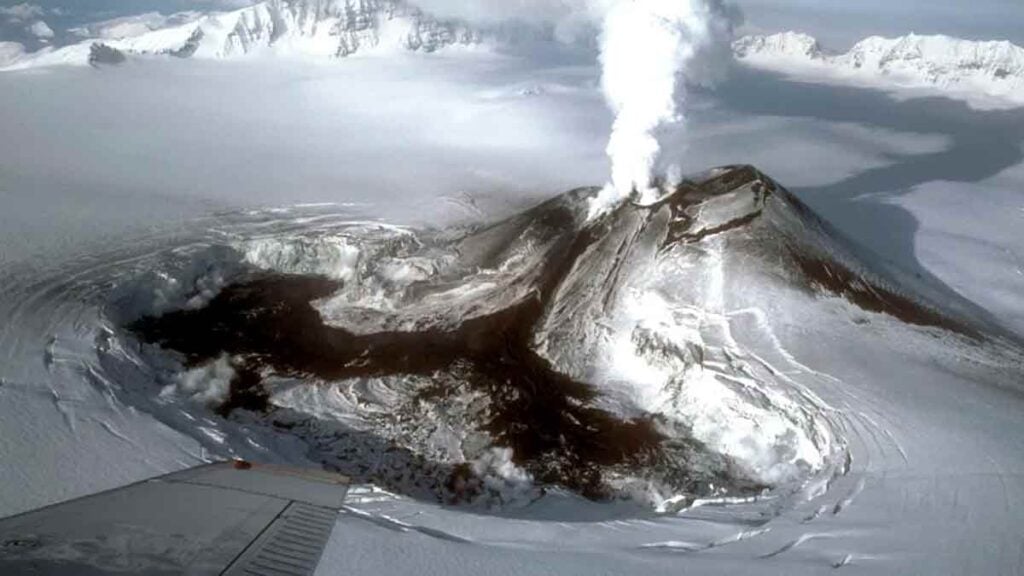
Veniaminof rises 2,507 meters above Alaska, though much of its personality stays buried under snow and glacial ice. Since 1993, it has erupted thirteen times, yet only two episodes gave researchers clear signals beforehand. One 2021 event escaped notice for three full days, which still makes monitoring teams wince. That habit earned it the label stealth volcano, and the name fits almost too well. Researchers led by Yuyu Li built models around the 2018 eruption and found a sly combination.
Magma climbs slowly there, the reservoir stays modest, nearby rock remains warm, and seismic clues stay faint. Less strain reaches the surface, so the mountain keeps its face remarkably still. Many volcanoes advertise their moods. This one whispers. Part of the mountain sits inside a broad summit caldera filled with ice. That setting changes pressure, drainage, and heat flow in subtle ways. The summit can look almost serene in photographs. Reality down below is far less polite. When magma rises slowly, the crust has time to adjust. Small movements spread out instead of cracking sharply through the rock. Seismometers prefer sharper drama. Veniaminof often refuses to provide it. That calm surface can fool professionals and nearby residents alike.
Where the Silence Spreads
That strange behavior matters far beyond one Alaskan peak. Scientists now see relatives of this stealth volcano in Mexico, Indonesia, Italy, and the Philippines. Popocatépetl towers near millions of people. Merapi watches over villages that know ash all too well. Stromboli draws visitors with postcard beauty and very real risk. Kanlaon carries its own unsettling streak. A quiet eruption can shake airports before communities even hear the news.
Ash does not need drama to damage engines or cancel routes. That is why the study reaches beyond volcanology. It changes emergency planning, insurance thinking, and public trust. Every lesson from Veniaminof sharpens the question officials ask elsewhere. What hides behind a calm skyline? Some of those volcanoes sit near dense neighborhoods, farms, roads, and schools. That simple fact turns scientific uncertainty into a public burden. Officials must choose when to warn, when to close airspace, and when to wait. Move too late, and lives can be lost. Act too early, and trust can erode. That balance becomes painful around a quiet mountain. Communities remember false alarms for years. They remember missed warnings even longer. Airlines do the same. Tourism boards do too. So do insurers.
New Ears on the Ground
Old monitoring methods still matter, yet they often miss the softest hints. So teams now add tiltmeters, fiber optics, gas sensors, and infrasound microphones. Each instrument listens for a different tremor, breath, or tilt. Together they make the stealth volcano less mysterious, though never fully tame. Machine learning adds another layer of patience. Algorithms sift weak patterns from noisy streams that would exhaust a human analyst. That quiet labor can catch change before the eye catches it. Scientists published those findings in 2025, and the paper gave the field fresh momentum. At the same time, the work stayed refreshingly practical.
People living near dangerous peaks need warnings they can actually use. Buried fiber cables can register tiny vibrations across wider areas than classic stations. Gas instruments watch sulfur and carbon changes near vents and fissures. Infrasound sensors hear pressure waves that people never notice. Satellites also help from above. They track heat, ash, and surface shape with steady discipline. No single device solves the puzzle. The real progress comes from overlap. One faint clue may mean little. Several faint clues can change the whole picture. That layered view suits a mountain built on half-truths.
Ice, Fire, and What Comes Next
Veniaminof still sits under ice, which gives its story an eerie edge. A glacier can soften the mountain’s outline, though it cannot soften the danger. That contrast keeps researchers fascinated by the stealth volcano and uneasy around it. Climate shifts may also change pressure, meltwater, and stress in ways nobody can dismiss. For that reason, this mountain belongs in a larger conversation about risk. It shows how nature can hide motion inside stillness. It reminds us that prediction remains part science, part humility, and part stubborn attention. The phrase stealth volcano may sound neat on paper, yet the reality feels messier. A mountain like this does not announce itself with courtesy. It gives a few hints, hides a few others, and leaves people racing to catch up. That race may shape volcanic monitoring everywhere for years.
Researchers know that better forecasts will never become perfect forecasts. Volcanoes keep their own timing. Still, better odds matter when towns, flights, and field teams stay exposed. Every extra hour can widen choices. A cleaner warning can calm panic. Smarter models can save money, gear, and lives. That is why Veniaminof matters far beyond Alaska. Scientists will keep testing those models against future unrest and missed signals. Each eruption becomes a lesson, even when it embarrasses the instruments. Field crews refine placement after every surprise. Data archives gain value with age. Old measurements can answer new questions. That slow accumulation feels unglamorous, though it often changes everything. Science moves like lava sometimes, not lightning. Patient work built this insight. Later work will sharpen the next warning too. And that may be the most human part of this story. We learn by listening longer. Mountains reward that stubbornness today. Sometimes.