
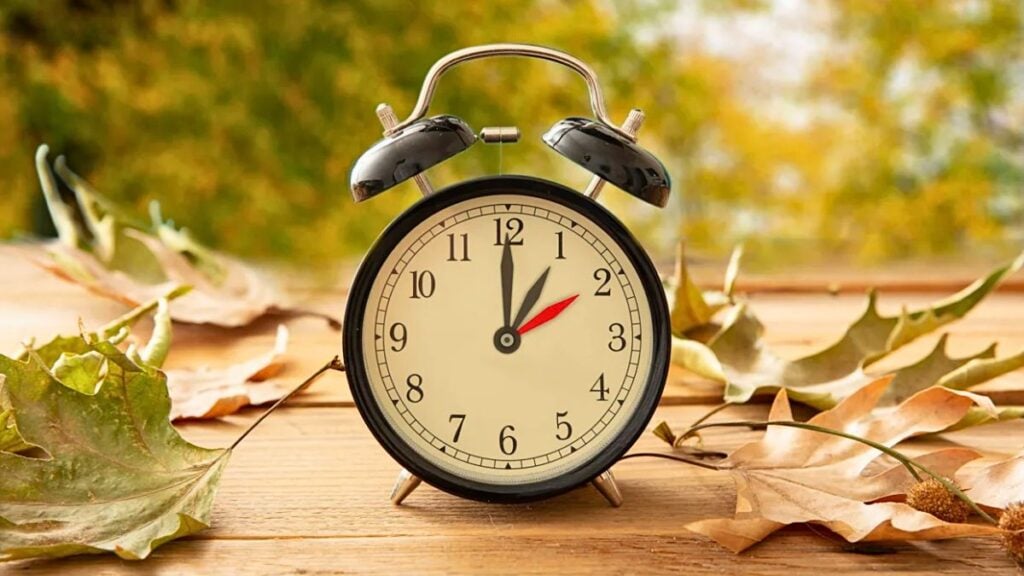
Twice a year, hundreds of millions of people adjust their clocks by a single hour. The disruption feels minor on paper. In practice, it ripples through sleep schedules, morning commutes, school runs, and body clocks for days afterward. Daylight saving time remains one of the most debated calendar conventions in the modern world — and in 2026, the dates, rules, and exceptions are worth knowing in advance.
Here is a complete breakdown of when the clocks change, who is exempt, and why this practice continues to generate controversy.
North America: When the U.S. and Canada Spring Forward
In the United States and Canada, daylight saving time begins on Sunday, March 8, 2026, at 2:00 a.m. local time. Clocks move forward by one hour — meaning one hour of sleep disappears overnight. The phrase “spring forward” captures it accurately: mornings feel darker for a while, but evenings stretch longer into daylight.
DST then runs for nearly eight months. It ends on Sunday, November 1, 2026, when clocks fall back one hour at 2:00 a.m., and that lost hour of sleep is returned.
A practical note on timing: the change happens on Sunday morning, not Saturday night, though many people adjust their clocks before going to bed on Saturday to avoid confusion the following morning.
Who in North America Is Exempt?
Not everyone participates. Two U.S. states sit permanently outside the daylight saving system.
Hawaii does not observe DST. Its low latitude means daylight hours remain relatively consistent year-round, making the adjustment largely unnecessary.
Arizona also opts out — with one notable exception. The Navajo Nation, which spans parts of northeastern Arizona, New Mexico, and Utah, does observe daylight saving time, creating a patchwork of time zones within a relatively small geographic area.
In Canada, the picture is similarly uneven. Most provinces and territories follow the standard DST schedule, but pockets of British Columbia, Nunavut, Ontario, Quebec, and Saskatchewan do not. In a significant recent development, British Columbia announced plans to switch to permanent daylight saving time — a move that would eliminate the twice-yearly clock change for the province entirely, pending alignment with neighboring U.S. states for practical coordination.
The United Kingdom and Europe: A Later Start
Across the Atlantic, the clock change follows a different schedule. The United Kingdom and most of continental Europe begin daylight saving time on Sunday, March 29, 2026. Clocks advance one hour at 01:00 UTC — or 02:00 Central European Time.
The U.K. transitions from Greenwich Mean Time to British Summer Time, while mainland Europe shifts from Central European Time to Central European Summer Time. Both regions return to standard time on Sunday, October 25, 2026, when clocks fall back at 01:00 UTC.
Several European nations remain outside this arrangement. Iceland does not observe DST at all, operating on UTC year-round. Russia and Belarus also no longer participate, having moved to permanent standard time in previous years.
Why Daylight Saving Time Exists — and Why It’s Contested
Daylight saving time is observed in more than 70 countries worldwide. Its origins trace back to early 20th-century proposals to align waking hours more closely with natural daylight — reducing artificial lighting in the evenings and, in theory, lowering energy consumption.
The energy-saving argument has since grown complicated. Modern research offers mixed conclusions. Some studies suggest minimal or negligible savings under contemporary energy use patterns. Others point to modest benefits in specific regions or seasons. The original logic, developed in an era of gas lamps and coal heating, does not map cleanly onto today’s air-conditioned, digitally connected households.
Supporters of DST emphasize its social and economic benefits. Longer summer evenings extend time for outdoor recreation, boost retail activity, and support industries from hospitality to professional sports. Evening daylight, they argue, has measurable value beyond energy calculations.
Critics focus on human biology. The one-hour shift in spring disrupts circadian rhythms — the internal biological clocks that regulate sleep, hormone release, and metabolism. Research has linked the spring transition to short-term increases in traffic accidents, cardiovascular events, and workplace injuries. The effect fades within days for most people, but for those with existing sleep difficulties or health conditions, the adjustment is more significant.
The Push for Permanent Daylight Saving Time
In the United States, the debate has moved from academic to legislative. Twenty states have passed laws or formal resolutions in favor of making daylight saving time permanent — eliminating the autumn “fall back” and maintaining longer evening daylight year-round.
The obstacle is federal law. Any permanent change to the U.S. time system requires an act of Congress. The Sunshine Protection Act, which would have enacted permanent DST nationally, passed the Senate unanimously in 2022 but stalled in the House of Representatives and was never signed into law. Similar proposals have been reintroduced in subsequent sessions without reaching a final vote.
For now, the twice-yearly ritual remains in place across most of the country.
When Does Spring 2026 Actually Begin?
Daylight saving time and the arrival of spring are related in timing but distinct in definition.
Meteorological spring begins on March 1 and ends on May 31. This fixed three-month window is used by weather forecasters and climatologists because it aligns neatly with calendar months, making seasonal data easier to compare year over year.
Astronomical spring follows a different logic entirely. It begins at the vernal equinox — the moment when the sun crosses the celestial equator and day and night reach roughly equal length. In 2026, that moment falls on March 20. Astronomical spring then runs until the summer solstice on June 21, when the Northern Hemisphere reaches its maximum tilt toward the sun and daylight hours peak.
Both definitions are valid. Which one matters depends on whether you’re reading a weather forecast or watching the sunrise.
A Quick Reference Summary
| Region | Clocks Forward | Clocks Back |
|---|---|---|
| U.S. and Canada (most areas) | March 8, 2026 | November 1, 2026 |
| U.K. and Europe (most countries) | March 29, 2026 | October 25, 2026 |
| Hawaii, most of Arizona | No change | No change |
| Iceland, Russia, Belarus | No change | No change |
Whether the clocks changing feels like a minor inconvenience or a genuine disruption, knowing the exact dates — and understanding the reasoning and ongoing debate behind them — makes navigating the transition a little easier.